Does Microchipping Hurt Dogs?
Most dogs barely notice the chip going in, and it is over in seconds. What the jab feels like, when sedation comes into it, and how to care for your dog afterwards.

If you’re about to book your dog in for a chip, it’s natural to worry about whether it will hurt them, especially if you’ve got a new puppy on your hands. The Royal Kennel Club says it may cause a little discomfort because it’s an injection, but most dogs don’t feel it at all.
What your dog will feel
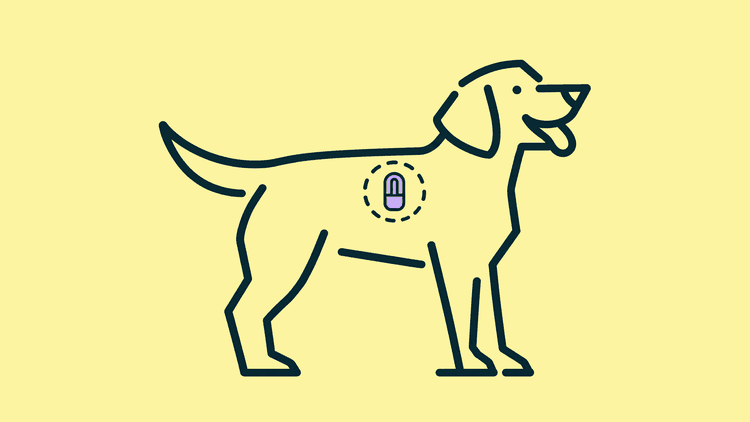
The chip goes under the skin between the shoulder blades, and the PDSA says it’s a very quick procedure, taking a few seconds. The needle has to be big enough to pass the chip through, so a University of Bristol vet school teaching sheet notes that it’s larger than a vaccination needle. BSAVA counts a brief pain response at the time of implanting as normal. Sometimes there’s a little bleeding at the site.
It's a very quick procedure.... It makes them jump... They might make a noise, they might tell you how much they didn't enjoy that. But usually you can bring them around with a biscuit and a bit of a fuss afterwards.
Dr Jen Hipwell
So you can expect a quick jab and maybe a yelp. Dogs Trust says it does not hurt the dog and should cause no more discomfort than a standard vaccination. Battersea describes it as a simple, quick and painless procedure.
Will my dog need sedating?
Dogs Trust says no anaesthetic is required for microchipping. BSAVA says implanting is not normally an act of veterinary surgery. It becomes one where the entry site needs closing, where sedation and pain relief are needed to implant safely, or where there’s a special risk to the animal. The RCVS classes sedation as medical treatment. If your dog might need sedation, or has a health issue that could complicate things, mention it when you book so the practice can plan for it.

If your dog is booked in for surgery anyway, ask whether the chip can be done at the same time. The Royal Veterinary College’s small animal practice offers chipping while a dog is already under anaesthetic for neutering.
Chipping a young or very small puppy
Dogs over 8 weeks old must be microchipped by law, with the rare exception of some working dogs. In practice the breeder is the keeper while the puppy is with its mother, so the breeder chips and registers the litter before the puppies leave for their new homes.

If you’re collecting a puppy, the chip will most likely already be in place, so your job is registering it. Our dog microchipping page explains how the whole process works.
Some puppies genuinely aren’t ready. The PDSA says a vet can give very small puppies, or dogs with certain health problems, a temporary exemption certificate so they can be chipped when they’re slightly older. BSAVA says a vet may judge that a toy or miniature breed should wait a few weeks to grow a little first. If that applies to your puppy, the vet’s certificate keeps you on the right side of the law until the chip can go in.
For more on timing, see our guide to the best age to microchip a puppy or kitten.
After the chip goes in
The Royal Veterinary College’s small animal practice says pets need no recovery time or pain relief after chipping. The PDSA suggests giving your dog a treat afterwards.
If you’re worried about side effects, our page on microchip safety and side effects covers them in more detail. Blue Cross says to contact your vet straight away if you think your dog has had a reaction.
Take a minute to register the microchip and check your phone number is on the record. If your details change later, update them then.