How Microchipping Laws Impact Stray Pets
Finding a stray raises legal questions most people never expect to face. Knowing who can scan a chip, who sees the owner's details and where your duty lies makes the situation far easier to handle.

You’ve come across a dog or cat that looks lost, and you’re not sure what you’re allowed to do next. The short answer is that the law gives you a clear route for a stray dog, less of one for a stray cat, and lets certain officials do things a finder can’t. This page sets out what the microchipping regulations say, who sees what on the chip record, and what happens once a stray is in the system.
What the law lets you do with a stray
In England, the microchipping regulations give certain officials a power you don’t have. An authorised person may take possession of a cat or dog without the owner’s consent to check whether it is chipped. An authorised person is someone the council or the government has authorised in writing, or a police officer or Police Community Support Officer (PCSO).

If you’ve found a dog in England, Wales or Scotland, the law puts a duty on you rather than a power. You must return it to its owner straight away if you know who they are. If you don’t, you must take it to the council for the area where you found it and say where you found it. In Scotland you can take the dog to the nearest police station instead.
For a stray cat there is no equivalent legal route. Take a found cat to a local vet to be scanned for a microchip. If you can’t get to a vet, a local cat charity or animal welfare organisation may be able to come out and scan the cat.
What happens to a stray dog after the council takes it
In England, Wales and Scotland, once the council has a stray dog the clock starts. If the owner doesn’t come forward and pay within seven clear days, the council may sell or give the dog to someone who will care for it properly. It can also pass the dog to a stray dogs establishment, or have it put to sleep. When the council sells or gives an unclaimed dog to someone acting in good faith, ownership of the dog passes to that person.
Getting your own dog back costs money. The owner must pay all the expenses of the dog’s detention plus a prescribed amount of £25. Councils add their own charges on top for collection, kennelling and return, and the daily rate alone can run to tens of pounds.
Who can see the owner's details
The scan gives the finder a number, not a name. In England, a database operator must give the owner and animal details to an authorised person, and must answer the owner’s own enquiries. The regulations do not name vets, rescue centres or members of the public who find a pet.
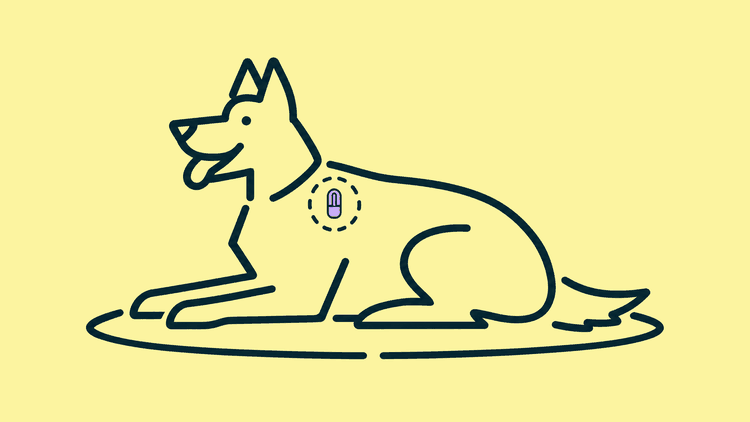
So as a finder, you won’t be given the owner’s phone number. Your part is to get the pet to someone who can scan it, and whoever scans it can then get in touch with the owner. On Pet Database, vets, wardens and rescuers can look up an owner’s details to get in touch, while the owner’s private contact details are never shown to the public.
If you have the chip number, our chip checker shows whether it’s registered and which database holds the record, though not the owner’s details. That’s useful if a vet has scanned a found cat and told you the number but not the database.
What happens to strays in practice
The law and the day-to-day reality are two different things, and Battersea Dogs and Cats Home’s 2026 survey of 50 local authorities shows the gap. It found that 87% of stray dogs handled by local authorities could not be easily reunited with their owner. The microchip or the collar and tag alone was not enough, and the main reason was records that were out of date or incomplete.

Stray cats sit almost entirely outside the system. Battersea’s 2026 freedom of information survey of 253 English councils found 99% don’t provide a service for stray cats because they have no statutory responsibility to do so. Anyone reporting one is referred to local vets or welfare charities.
Why a stray's chip only helps if it's registered
The chip only holds a number, so a stray can only be traced back to its owner if that number is registered with the owner’s details. Our guide to UK pet microchipping laws explains what has to be on the record. If the pet you end up keeping is a cat that has never been chipped, our cat microchip page covers getting them registered.
Common questions
How long before a stray cat is legally yours?
There’s no set waiting time to count down before a found cat becomes yours. The finder rules in the stray dog law apply to dogs only, and give no period for cats. Keep trying to find the owner first: offer the cat shelter and food, scan for a microchip and ask around. Once you’re sure the cat doesn’t have a home and owner waiting for them, you can adopt the cat yourself and get it microchipped in your name.
Can I keep a stray dog I've found?
In England and Wales you can’t just decide to keep a stray dog; you have to go through the council. If you tell the council officer that you want to keep the dog and give your name and address, the officer follows a set procedure: record the dog, your details and where it was found, try to contact any identifiable owner, consider whether you’re suitable to keep the dog, and then let you take it home. You must keep the dog for at least one month if unclaimed.
Scotland differs: a finder who keeps a dog for two months without it being claimed becomes its owner, while England and Wales have no equivalent rule. So in England and Wales there’s no waiting period after which a found dog automatically becomes legally yours.
What about stray dogs in Northern Ireland?
Northern Ireland sits outside the main sections above, under its own Order. A council there can sell on or put down an unclaimed stray dog once it has been held for five days. That is shorter than the seven clear days that apply in Great Britain.
If a scan has turned up a chip number for a found pet, our chip checker only needs the 15-digit number. It searches multiple UK databases at once, free and without an account.