GPS Dog Tags and Trackers: Do They Replace a Microchip?
GPS trackers, Bluetooth tags and microchips each do a different job, and each has limits worth knowing. Get clear on what each one offers before you spend anything.

If you're weighing up a GPS pet tracker tag against a microchip, a tracker doesn't replace a chip. They're different things doing different jobs, and only one of them is what the law asks for. In England, Scotland and Wales that's the microchip. In Northern Ireland, dogs must be microchipped as part of the dog licensing system. A tracker on the collar sits on top as a useful extra.
How a GPS dog tracker works
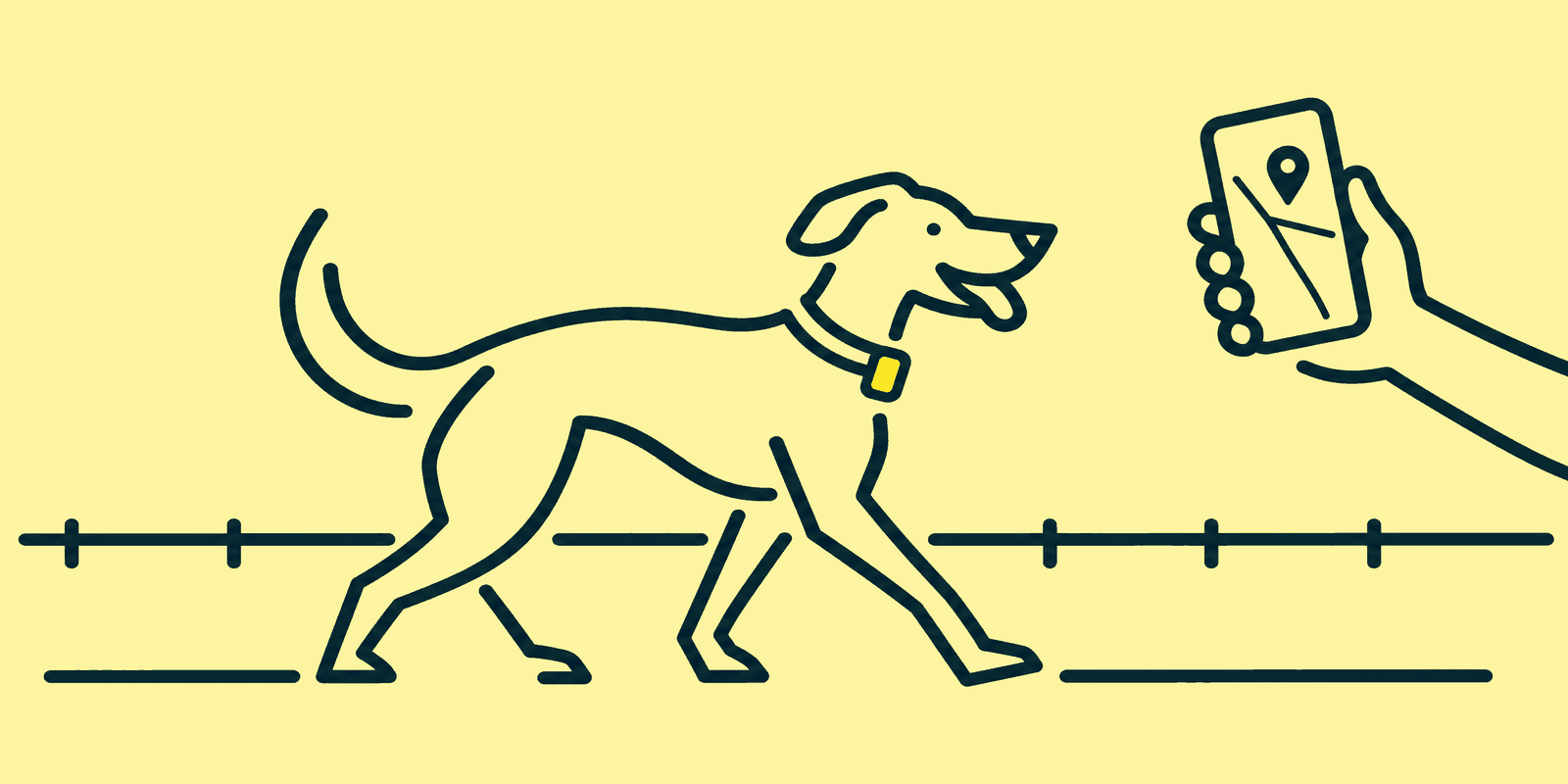
A GPS dog tracker tag is a small device that attaches to your dog's collar. It uses GPS and a mobile data signal from a built-in SIM card to send your dog's location to your phone. The mobile network fees are wrapped into a subscription, so there's an ongoing cost on top of the device itself. In practice, you open an app and see where your dog is.
The limits worth knowing before you buy

A tracker only works while it has charge and signal. Battery life varies by model and use, and the device charges with a USB-C cable. It works only where there's mobile coverage. A tracker with a flat battery, or a dog lost somewhere without coverage, shows you nothing.
It can also come off. A tracker lives on a collar, and collars slip, break or get removed.
So a tracker is a useful extra layer for a dog prone to wandering. But it's a layer that can fail, run out of charge or come away with the collar. Nothing here is a reason not to buy one, as long as you know what you're buying.
Bluetooth trackers are not GPS
A Bluetooth tracker works differently from a GPS one. It has no built-in GPS chip and no mobile data connection, so it only shows a location when a nearby smartphone picks up its signal. In truly rural areas, that may be no help at all.
Why the microchip still has to be there

A chip with no registration doesn't count. If your dog isn't chipped or the record is out of date, Pet Database's dog microchipping page covers how to sort it.
A chip also outlasts any tracker: it stays with your dog for life, under the skin, with no battery to charge and no collar to lose. When a vet, warden or rescue scans a found dog, the chip number leads to your contact details on the database. The chip isn't linked to GPS and can't track a pet.
In England, Wales and Scotland, a dog must still wear a collar and tag showing your name and address in a public place, even when microchipped. Pet Database's guide to what the law requires on your dog's collar sets out the details. The guide to what to engrave on a dog ID tag covers what to put on it.
A QR tag, such as Pet Database's Smart Pet Tag, sits in the same camp as an engraved tag. It helps a finder reach you. Like the engraved tag, it can't show your pet's location.
The chip and its registration are the permanent ID. A collar tag is the one any finder can read straight away, and a tracker sits on top if you want live location. If you want a tag a finder can scan in seconds, a Smart Pet Tag does that job.