Pet Microchip Scanners and New Chip Tech
From why a scanner can miss a chip to temperature-sensing chips and the record reforms on the way, this is what the technology behind your pet's chip means for you.


Your pet’s microchip stores a number, a scanner reads it, and a database turns that number into your contact details. That three-step chain is the whole system, and both the chip and the scanners that read it have limits. Knowing those limits makes the newer kit you’ll hear about, such as temperature-reading chips, microchip cat flaps, and central portals, easier to judge.
The standard every UK pet microchip follows
Every compliant UK pet microchip is a radio-frequency identification (RFID) chip working to one shared standard. In England, the law sets out what a chip implanted in a dog or cat must do: it must carry a unique number that includes the manufacturer’s code, meet two international standards (ISO 11784 and 11785), and respond to a reader working at 134.2 kHz using FDX-B. The World Small Animal Veterinary Association (WSAVA) describes a true ISO chip as giving a 15-digit number. Because every compliant chip follows the same standard, any ISO reader can pick it up.
Why some scanners miss some chips
Not every scanner reads every chip. Some older chips don’t meet the ISO standard that UK scanners are built around, and scanner models vary in which chip types they pick up. How and where a pet is scanned matters too: a chip may sit somewhere other than between the shoulder blades, either because it’s moved or because it was implanted elsewhere.
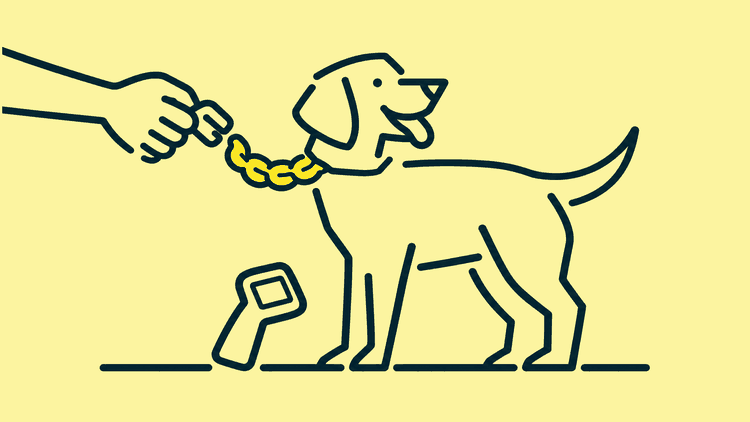
Metal collars, nearby electronics or a weak scanner battery can also stop a reading. So a blank scan doesn’t always mean there’s no chip, and it’s worth asking for a careful rescan before assuming the worst. Our guide to microchip migrationexplains what to check next.
Can a phone read a pet microchip?
A phone can’t scan a pet’s microchip, though you can buy a scanner that links to one. Near-field communication (NFC) in a phone works at 13.56 MHz over a range of about 2 cm, a completely different frequency from a pet chip.
A phone is still useful for showing a finder your details. Our comparison of QR code tags with traditional ID tags explains how a tag like that works alongside a chip. And if you’ve read about a “dog tracking chip”, our page on GPS trackers versus microchips sets out what does and doesn’t exist.
Temperature-sensing chips, cat flaps and feeders
The most talked-about new pet microchip technology is the temperature-sensing chip. One temperature-sensing chip on the UK market is described by its maker as an ISO-compliant identification chip with a temperature biosensor alongside the RFID device, reading from 33 °C to 43 °C.

There are two catches, both from the maker’s own guidance. Any ISO reader can read the chip’s ID number, but only some readers reliably show the temperature. And the reading is taken under the skin at the chip site, so the maker says it shouldn’t be compared with a rectal temperature, with trends mattering more than single readings. So far, no UK vet body or charity has published a view on these chips, so it’s worth asking your vet what they make of them.
Microchip cat flaps and feeders are a different idea, and a more established one. Makers of microchip cat flaps say the flap reads your pet’s existing chip, or a collar tag, and unlocks when the pet approaches. It stores up to 32 pet identities in the flap itself. Microchip feeders work the same way: you programme it with your pet’s chip and the lid opens when a registered pet comes close. Neither device checks any database; they just keep a list of numbers in their own memory. That means they work with the chip your pet already has, and registering the chip on a database is still what gets a lost pet home. You can register your pet’s microchip with Pet Database if it isn’t already.
What's coming next for microchip records
The bigger changes on the way concern the records behind the chip. On 29 March 2024 the government announced a package of reforms. One is a central portal so approved users such as vets, local authorities and police can search microchip records in one place. Another is a required field recording whether a pet has been reported missing. They also give the current keeper, meaning the person the pet lives with, 28 days to object to a transfer of keepership, so stolen pets can’t simply be re-registered, and include action to prevent duplicate records. None of this is in force yet.

It follows a recommendation from the government’s Pet Theft Taskforce in 2021. The Taskforce called for a single point of access to all databases so missing or stolen pets can be flagged. The Taskforce also looked at DNA and UV forensic marking, and backed police pilots of these as additions to microchipping rather than replacements. Their reasoning was practical: a chip can be read easily with the owner’s details available immediately, at lower cost than DNA testing.
For now, the chip in your pet and the record behind it remain the system everything else builds on. If your pet’s chip isn’t registered yet, the next step is to register the chip so the number leads back to you. Whatever the scanner, cat flap or portal comes next, the record behind the chip is still what gets a lost pet home.